
I Hope You Enjoy My Clock
"History doesn't repeat itself, but it often rhymes." - Mark Twain
I know I said we would be talking about great-great grandparents John & Thresea Eidenschink in this next chapter of Pre-AC, but after raising some questions about Great-Grandpa Carl’s service during World War I in the last chapter, I did a little more digging.

For instance, after a ton of searching, I was able to find actual records that show he enlisted in the Army on October 21, 1918 at 23 years of age, and his discharge date was May 7, 1919.
Which seems strange since WWI started on July 28, 1914; the US joined the war on April 6, 1917; and then WWI “ended” with the armistice November 11, 1918 (though the Treaty of Versailles officially concluded the war in 1919).
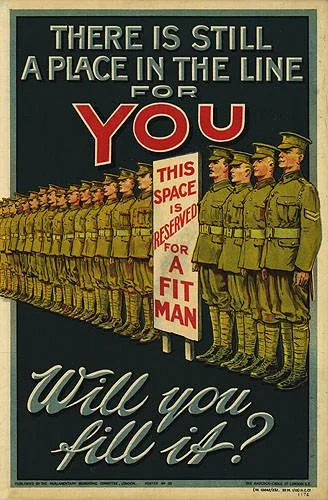
This feels interesting because a large number (but not as much as we’ve been led to assume, as we’ll chat about further on down below) of eligible American men either volunteered before or right after the US entered the war in April 1917. The rest joined through the Selective Service, a.k.a. the draft, which required men aged 21-30 to register starting June 5, 1917, later expanding to ages 18-45 with men being drafted in waves through 1918.
Below are the dates for when registrations for the Selective Service were called up:
June 5, 1917 (First Registration): Men aged 21-30 must register.
June 5, 1918 (Second Registration): Men turning 21 since the first registration.
August 24, 1918 (Supplemental): Men turning 21 after June 5, 1918, register.
September 12, 1918 (Third Registration): Men aged 18-45 must register.
So Carl didn’t volunteer when we first entered the war, but then he also must not have been drafted…which, for me, brings up so many questions. Did he just not want to go to war? In which case, don’t blame ya buddy! I had originally assumed he was already a bachelor farmer at 23 and therefore wouldn’t want to leave his farm, but Census records show that he was still living with his family in 1920. Did his dad/my great-great grandpa John need him to stay and help with the family farm? Lots of farmers’ sons received deferments (Class II-C) if it was essential that those sons stay home to keep the farm going, but Carl’s younger brother Fredrick Alfred was home during that time, too, and wouldn’t turn 18 until June 1918.
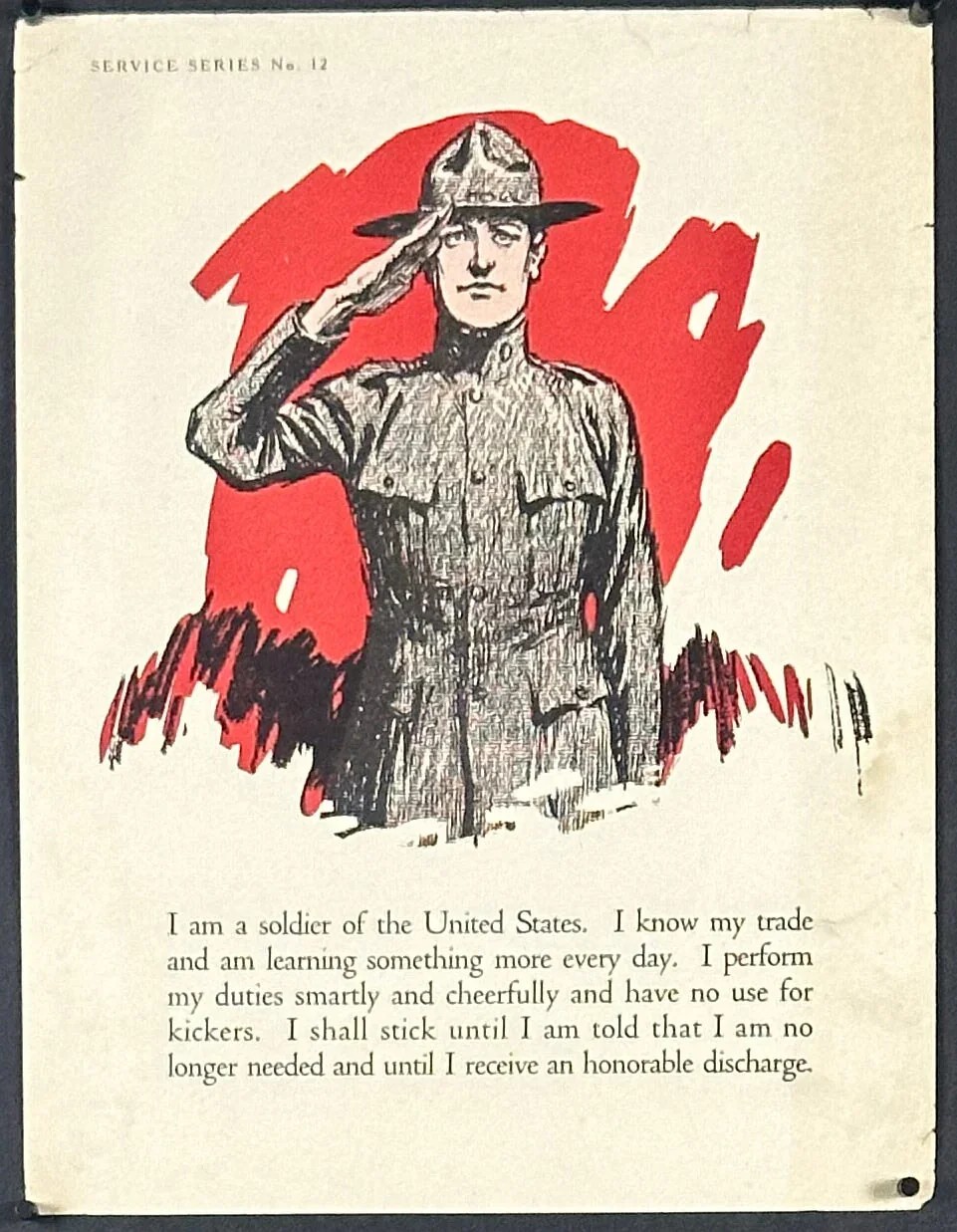
BUT - that’s also another question I have…did Carl end up going so that Fred wouldn’t have to? Because usually Class II-C deferments could only be applied to one son. So if Carl didn’t go voluntarily and wasn’t drafted, why enlist toward the end of the war? I admittedly need to study up on my WWI facts, but I think I remember that Germany and their allies were already surrendering in October as our Allied forces were pushing them back towards the Western front, and the only ones for whom the armistice requests came as a surprise was Americans at home, who assumed that the war was going to last a helluva lot longer for them than it did. If you’re a WWI buff, can you please drop what you know about this in the comments below? Probably need someone much more knowledgeable about WWI than me to weigh in on this.
One possible clue is that we know the Third U.S. Army was established on November 7, 1918, and was dedicated staying in Europe for occupation and demobilization duties, with some forces transitioning into post-war stabilization efforts.mSo if Carl enlisted in the Army on October 21, 1918, and his discharge date was May 7, 1919, I think it’s probably safe to assume he was likely part of the Third U.S. Army, whether that was his original intention when he signed up or not.
I still would love to figure out where he was stationed while in the war, though, but I can’t seem to track down any (legible) Army Infantry number.
But it also makes me wonder about the subject of our next chapter, which are Carl’s parents and my great-great grandparents, John and Thresea Eidenschink.

Carl’s dad, my great-great grandpa John Peter Eidenschink, immigrated to America from Bavaria in the early 1880s. That period saw one of the biggest surges of German immigrants of that century, due to lack of land and opportunity but also political strife and military conscription after the revolutions of 1848. John wasn’t born until 1857, so he wasn’t yet alive to see the revolutions, but he did grow up amongst the fallout that resulted from them. I haven’t looked into whether or not he was also party to the mandatory military conscriptions that other ancestors of mine came to America to escape, but I can’t imagine that they were a reason for him to stay in Germany, if you catch my drift. Despite what movies and media would like us to believe, a LOT of Americans, especially immigrants, were against the US getting involved in either world war. For German immigrants especially, it meant possibly sending their boys to fight members of their own families (for instance, when I was trying to find registration and enlistment records, I came across a lot of fatalities - civilian and soldier - listed in German’s WWI records with the last name of Eidenschink). Carl’s older brother Frank was 33 when he registered, making him 3 years too old for the Selective Service until September 12, 1918, when they widened it to 45. I can only find a registration card for him, so I don’t know if he actually enlisted. Same for Carl’s other older brother Louis - I found his registration card, and his age at the time fits into the eligible age range for all of the Selective Service waves, but I can’t tell if he actually enlisted.

So it could be a real possibility that perhaps John and Thresea (who also immigrated from Bavaria) were staunchly against the war and their boys enlisting in it? Which again - would not blame them in the slightest.
Relatedly, I think about this scene from The Curious Case of Benjamin Button every time I think about WWI - I’ve watched it maybe a billion times and it still makes me cry like a baby every single time:
For Americans who had been in the States longer than those immigrants, the Civil War had occurred only 50 years before. Even though that sounds like a long time, that’s basically the end of the Vietnam war for those of us who are alive today - it’s really not that distant of a memory, and a lot of us reading this have parents and grandparents who are still feeling the effects from that conflict.
So who knows…there could a lot of reasons why Carl didn’t volunteer for WWI until he did, and I would have empathy for each and every one of them.
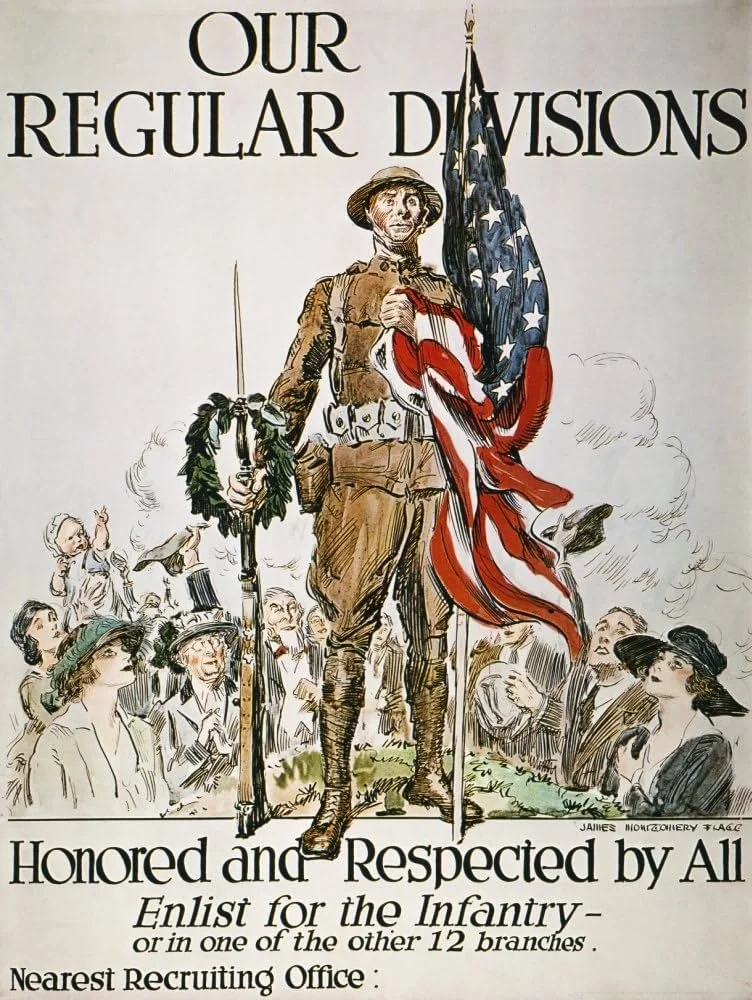
I was actually thinking about this a lot this weekend, while patrolling my neighborhood with some fellow neighbors. Right now, in Minneapolis, a lot of us are having conversations about courage over cowardice, doing what’s right in the face of fear and bodily harm, and whether we’re brave enough to put ourselves at risk in order to protect neighbors who are more vulnerable than us. These are the same conversations that a lot of my white friends and I had during the George Floyd protests, and every time I have this particular type of conversation, it really drives home how fucking plush and privileged my life has been that I have never had to be actually forced into the fight. I’m not afraid to admit that the last thing I want to do is put myself in the path of bodily harm, retribution, or punishment…but I’m also a person who could not live with myself if I decided to cut and run, either. It’s also made me think a lot about what I’ve learned about my ancestors this past year and the fights they took up during their lives…the ones who fought against the British in the Revolutionary War…the one who volunteered for the Union before half of the North even knew the Civil War was an official go…the ones who did their part for both world wars…and my dad, who volunteered for the Guard. I don’t know if any of them were excited to fight for this country or defend what they felt was right, but I’ve had a lot of sleepless nights, lately, where I’ve found myself empathizing with what it must have been like to resolve yourself to bravery even when your body is full of trepidation and fear.
Anyway - relatives, do you remember your Grandpa Carl or Grandma Clara (or your parents) telling you anything about Carl’s service in WWI? And if you do, can you tell me what you remember down in the comments or send me a message? I’ve love to be able to fill out as much of his history as possible.
And if you have other memories or details or anecdotes that have nothing to do with his time in the war, I’d be super grateful if you would share those with me, too!
See you all in the next chapter,
-Amber